How to set up a weight distribution hitch: the fender height method
Shop stepsReading span: 5 minchecked November 28, 2026by the editorial desk
How to set up a weight distribution hitch in one line: measure the front fender unhitched (H1), hitch up without the bars (H2), work out your truck maker's target height, then tension the spring bars until the fender reaches it. The target is not the unhitched height. Ford wants half the rise back, and so does Ram on its 2500 and 3500.
On the ticket
Load truck and trailer for the trip and park on level ground. Measure the front fender height without the trailer (H1), then with the trailer on the ball and no bars (H2). Ford's F-150 and Ram's 2500/3500 aim for the halfway point between the two. Add bar tension until the fender sits there, check the trailer is level, then torque every bolt.
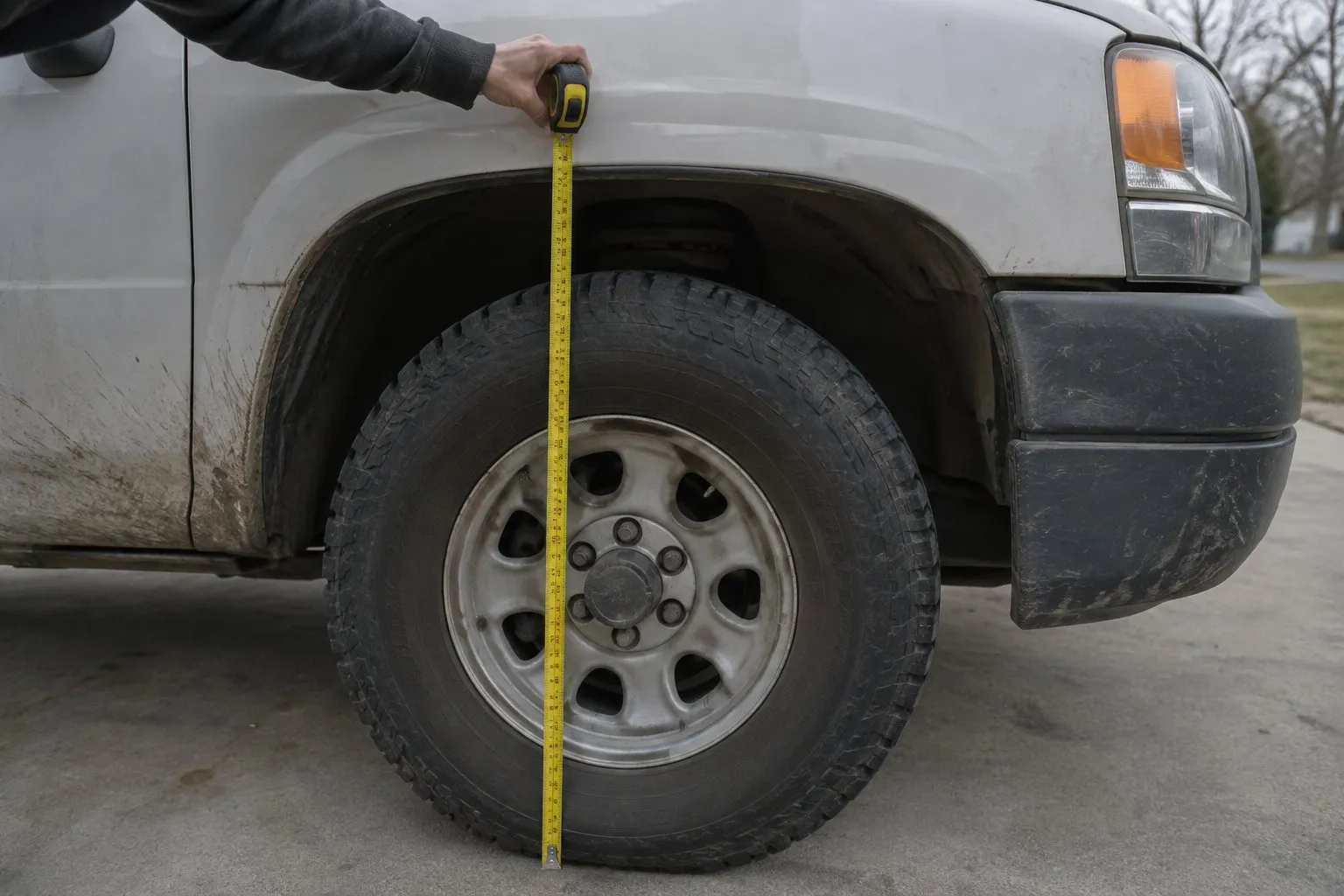
Before you start: the hitch is installed, the rig is loaded
This page starts where installation ends. The head is on the shank, the ball is torqued, the brackets are on the A-frame; if not, begin with how to install a weight distribution hitch. You need a tape measure, a pencil and paper, wheel chocks, and the manual of your hitch. Ford's set-up also assumes the trailer carries its trip load with about 10 % on the tongue, so weigh it first if you have never done that: how to measure tongue weight.
Load both vehicles the way they will travel. Equal-i-zer lists propane, water, ATVs, generators and everything else that rides along, and asks for all tires at their proper pressure. A set-up done empty is wrong the day you pack.
Seven measured steps
Load, park, chock
Park truck and trailer on flat, level ground, in line with each other. Chock the trailer. If your truck has auto-leveling or air suspension, see the note further down before you measure anything.Match ball and coupler height
With the trailer level or slightly nose down on its jack, set the hitch head on the shank so the ball sits at coupler height. Ford's set-up asks for this before the first measurement. If the shank cannot reach, see how to measure hitch drop.Measure H1
Trailer not coupled. Measure from the ground to the top of the front fender lip, straight above the center of the wheel. Equal-i-zer suggests measuring both sides and using the average.Couple without bars, measure H2
Lower the coupler onto the ball, latch it, and retract the tongue jack fully, with no spring bars attached. The front rises. Measure the same spot again: that is H2.Work out your target
Take the target from your vehicle maker, not from a forum (table below). H1, H2 and FALR are explained in the weight distribution hitch glossary.Hook up the bars and measure
Raise the tongue and truck with the jack until the bars swing onto the brackets, pin them, retract the jack and measure the fender. Below target, add tension; above it, take tension off.Level the trailer, torque the bolts
Measure the trailer frame at front and rear. If it is not level, move the head on the shank and measure the fender again. Then torque all bolts to the hitch maker's values and finish the coupler latch, wiring, safety chains and breakaway cable.
The target comes from your truck maker
- 1H1 · unhitched
- 2H2 · hitched, bars off
- 3target · bars on
- 4Ford: 50 % front axle load restoration
- 5Ram 2500/3500: (H2 − H1) ÷ 2 + H1
- 6Equal-i-zer: 50–100 %, never over 100 %
Measure the front fender height from the ground to the top of the wheel opening. Targets from the 2026 Ford towing guide, the 2022 Ram 2500/3500 owner's manual and the Equal-i-zer manual.
| Vehicle maker | What the manual asks for |
|---|---|
| Ford, 2026 guide | A weight distribution correction factor per vehicle: 50 % for the F-150, F-150 Raptor, Expedition, F-250/F-350 Super Duty, F-450 crew cab and all Super Duty Chassis Cabs; 25 % for the F-450 regular cab. Target = H2 minus (H2 − H1) × factor. Several smaller Fords list it as not required, and Transit lists use as not recommended |
| Ram 2500/3500, 2022 manual | Fender at about (H2 − H1) ÷ 2 + H1, with or without air suspension |
| Equal-i-zer, 4K manual | 50 to 100 % weight distribution is good; your vehicle manual sets the exact figure; never over 100 % |
Ford's own example for an F-150 reads: H1 37 inches, H2 38 inches, target 37.5 inches. The front comes back half of the way it rose, not all of it.
Adding or taking off tension
How you change the tension depends on the hitch. On the Equal-i-zer, more spacer washers in the head or higher L-brackets add tension; fewer washers or lower brackets reduce it. Each change means jacking up, removing the bars, unhitching, adjusting, hitching up again and taking a new C measurement. CURT's TruTrack 4P uses interlocking nuts and six preset tilt holes instead of washers. Other hitches have their own method, so follow the manual in the box. The details, including head tilt and bracket spacing, are on weight distribution hitch adjustment.
Trucks with air suspension or auto-leveling
Leveling systems change the result after you set up. Equal-i-zer's manual says 4-corner auto-leveling decreases the weight distribution by 20 to 25 %; if it cannot stay off while driving, set the hitch to 75 to 100 % to make up for it. With rear-only leveling, let the truck level itself before you take the hitched-with-bars measurement. Ram's 2500/3500 manual keeps the engine running while you attach the trailer so the air suspension levels properly. Model-specific notes are on weight distribution hitch with air suspension.
The first 50 miles
Ford's guide asks you to stop after about 50 miles in a protected spot and check the hitch attachment, lights, connections and the trailer's lug nuts. Equal-i-zer adds a check of all hardware before every trip. If the trailer feels loose or sways after set-up, Equal-i-zer points first at too little spring arm tension and asks you to recheck the three front measurements before changing anything else.
Still choosing the hitch itself? The best weight distribution hitch page sorts the picks by tongue weight. Back to the weight distribution hitch handbook start page.
Questions at the scale house
Q01How do I know my weight distribution hitch is set up right?
Measure. The front fender should sit at your vehicle maker's target between H1 and H2, and Equal-i-zer's manual calls 50 to 100 % weight distribution good, never over 100 %. Equal-i-zer works it out as 100 × (B − C) ÷ (B − A), with A unhitched, B hitched without bars and C hitched with bars.
Q02Should the trailer be level after set-up?
Yes. Equal-i-zer's manual has you measure the trailer frame from the ground at the front and the rear after the weight distribution is right, and move the hitch head up or down on the shank if the two differ too much. Ford's set-up starts with the trailer level or just slightly nose down.
Q03Do I have to redo the set-up with a new truck?
Yes. Equal-i-zer advises running through the complete adjustment again whenever you change tow vehicles, even a similar one, and its manual says never to move a hitch to a different tow vehicle or trailer without adjusting it. A new trailer or a very different load calls for the same.
Weighed against
Next stop
- AdjustmentShop stepsWeight distribution hitch adjustment: which washer, bracket or ball change adds or removes tension, and how to spot over- and under-distribution.
- InstallationShop stepsWeight distribution hitch installation in order: coupler height, ball, head on the shank, bars, A-frame brackets, then the torque values.
- Hitch dropShop stepsHow to measure hitch drop: level the trailer, measure coupler and receiver height, then set the ball at the height your hitch maker asks for.
- Air suspensionWill it fit?Air suspension towing with a weight distribution hitch works, but the set-up changes: what Ram, Equal-i-zer and CURT say for auto-leveling.
- Measure tongue weightShop stepsHow to calculate tongue weight the reliable way: weigh the loaded coupler on a tongue scale, a truck-stop scale or a bathroom scale.
Who weighs it up
weightdistributionhitch.com Editorial Desk
Towing set-up & hitch picks
We are the editorial desk at weightdistributionhitch.com. For every hitch we pull the tongue weight and trailer weight ratings, the shank and ball size, the bracket spacing and the torque values out of the maker's install sheet, then set them against the receiver label and the tow vehicle's own towing guide.
- — Ratings copied from the install sheet or part page, with document name
- — Set-up targets taken from the truck maker's towing guide, not a rule of thumb
- — "Not stated by maker" wherever a rating, surge-brake note or warranty term is missing