Hitch classes: what a class 3 hitch means for weight distribution
How it worksReading span: 4 minchecked November 28, 2026by the editorial desk
A class 3 hitch is a receiver with a 2 inch opening, typically rated up to 8,000 lb of trailer and 800 lb of tongue weight. Class 4 uses the same opening with higher ratings, and class 5 goes higher still. Some class 3 and most class 4 receivers can take a weight distribution hitch for more, but the label on your receiver decides, not the class name.
On the ticket
Hitch classes group receivers by opening size and typical rating. CURT lists class 3 at 2 inches, up to 8,000 lb and 800 lb of tongue weight; class 4 at 2 inches, up to 10,000 lb and 1,000 lb; class 5 at 2 or 2-1/2 inches and higher. No standard we read defines these classes, and ratings vary by model, so read the label on your receiver.
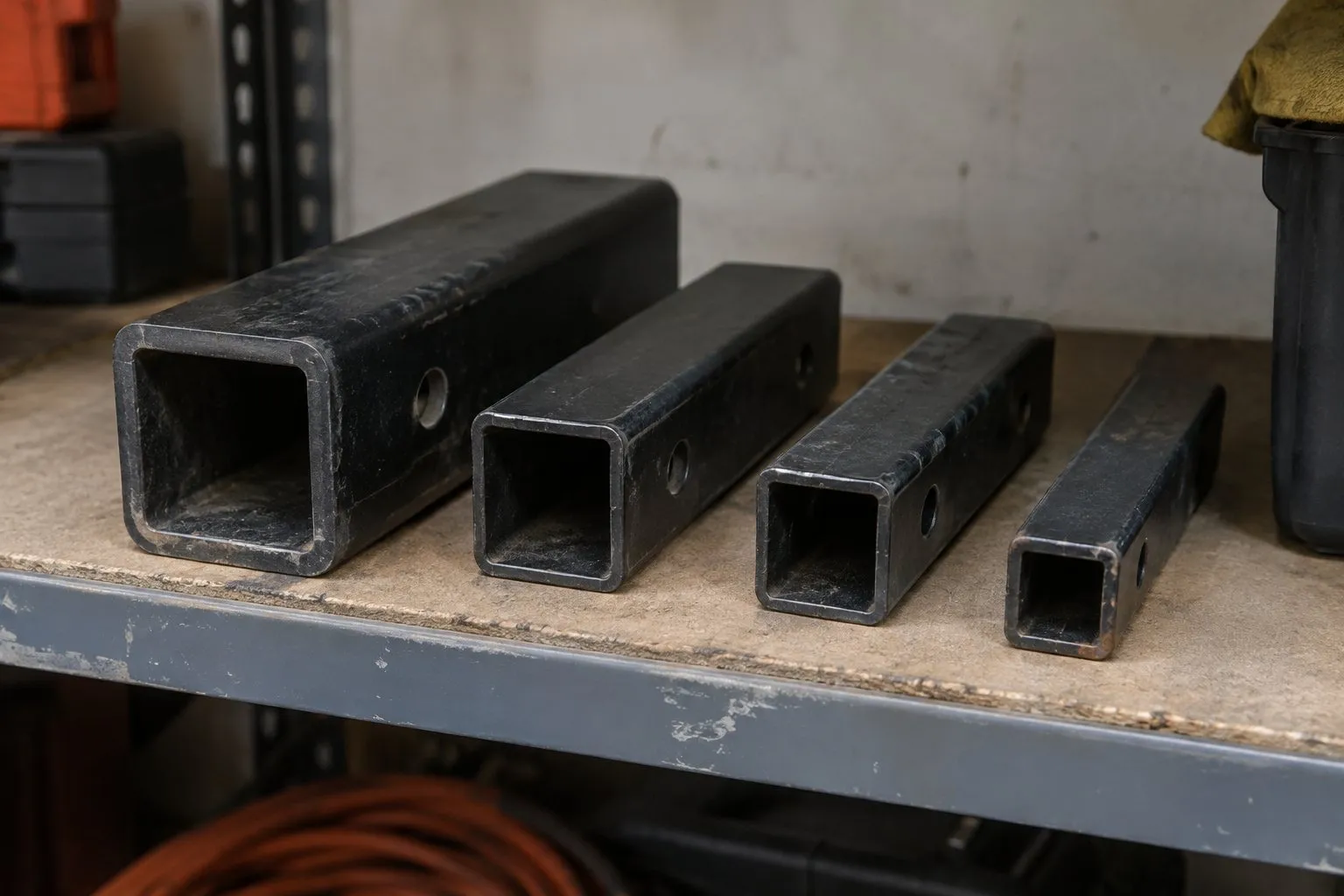
The five receiver classes at a glance
Receiver hitches are sorted into classes 1 to 5 by the size of the opening and the weight they are built for. Hitch makers use the classes to group their catalogs. The figures below are CURT's, from its guide to hitch types, and CURT notes that ratings can be lower for an individual model.
| Class | Receiver opening | Trailer weight (typical) | Tongue weight (typical) | Usually on |
|---|---|---|---|---|
| 1 | 1-1/4 in. | Up to 2,000 lb | Up to 200 lb | Passenger cars, small crossovers |
| 2 | 1-1/4 in. | Up to 3,500 lb | Up to 350 lb | Sedans, minivans, crossovers |
| 3 | 2 in. | Up to 8,000 lb | Up to 800 lb | Full-size pickups and SUVs, also vans and crossovers |
| 4 | 2 in. | Up to 10,000 lb | Up to 1,000 lb | Full-size pickups and SUVs |
| 5 Xtra Duty | 2 in. | 16,000 to 17,000 lb | 2,400 to 2,550 lb | Heavy-duty and super-duty trucks |
| 5 Commercial Duty | 2-1/2 in. | 18,000 to 20,000 lb | 2,700 lb | Dually and chassis cab trucks |
Those are weight-carrying figures, with the trailer's tongue load resting on a plain ball mount. CURT calls class 3 the most common class on full-size pickups and SUVs, which is why "class 3 hitch" is the one most people search for.
What weight distribution changes
A weight distribution hitch lets a receiver use a second, higher rating, if the receiver has one. Ford's guide says the label on a hitch receiver gives both its weight-carrying and its weight-distributing capacity. Class alone does not tell you which you have:
- Class 3: CURT says some class 3 hitches can be used with a weight distribution hitch, for a towing capacity as high as 12,000 lb. Others cannot.
- Class 4: CURT says most class 4 hitches can take one. Here CURT's own pages disagree: its hitch-type guide gives ratings as high as 12,000 lb, while its class 4 page gives up to 14,000 lb and 1,400 lb of tongue weight.
That disagreement inside one maker's site is the best reason to ignore the class number at the counter and read the label. What the two figures on it mean is on hitch tongue weight rating, and the two ways of carrying tongue load are compared on weight-carrying vs weight-distributing hitch.
Shank size follows the class
For a weight distribution hitch, the class matters most through the opening. Classes 3 and 4 share the 2 x 2 inch opening, and so does class 5 Xtra Duty. Most weight distribution kits ship with a 2 inch shank for that reason.
Class 5 Commercial Duty uses 2-1/2 inches. CURT's 17422 trunnion kit, for example, is listed as compatible with class 3, class 4 and most class 5 receivers, and CURT says its Xtra Duty and Commercial Duty receivers may need the 2-1/2 inch replacement shank. Hitches sorted by receiver size are on the hitch size guide.
Ford's trailer classes are something else
Ford's towing guide numbers classes too, but for trailers, not receivers, and by gross trailer weight:
| Ford trailer class | Gross trailer weight | Ford's hitch note |
|---|---|---|
| I, light-duty | Up to 2,000 lb | Conventional weight-carrying hitch |
| II, medium-duty | 2,001 to 3,500 lb | Weight-distributing hitch not required unless specified for a particular vehicle |
| III, heavy-duty | 3,501 to 5,000 lb | Weight-distributing hitch not required unless specified for a particular vehicle |
| IV, extra-heavy-duty | Over 5,000 lb | Most applications require a weight-distributing or 5th-wheel hitch |
Ford adds that some industry sources call trailers over 10,000 lb Class V. So a "class 4 hitch" (a receiver) and a "Class IV trailer" (over 5,000 lb) are not the same thing, even though the numbers look alike. Whether your own truck draws its line at 5,000 lb is covered on when you need a weight distribution hitch.
No standard hands out the class numbers
Many shops say the classes come from SAE J684. The scope of SAE J684 (2004) covers couplings, hitches and safety chains for trailers with a GVWR up to 10,000 lb, and it contains no class designations. The class tables you see are maker and industry groupings, and the figures shift from one source to the next. What J684 does cover is on the SAE J684 page.
The order to check things in
- Read the receiver label: weight-carrying pair, and the weight-distributing pair if it has one.
- Read your truck's towing guide for its maximum trailer weight and any line above which a weight-distributing system is required.
- Weigh your loaded tongue and pick a hitch whose stated range covers it.
The lowest of those ratings is your limit. A higher class, or a weight distribution hitch, never lifts the truck's own rating, as explained on does a weight distribution hitch increase towing capacity.
Questions at the scale house
Q01What is the tongue weight rating of a class 3 hitch?
CURT puts a typical class 3 receiver at up to 800 lb of tongue weight in weight-carrying use, with up to 8,000 lb of trailer. Some class 3 receivers carry a higher rating with a weight distribution hitch; CURT mentions towing capacities as high as 12,000 lb for those. Your receiver's label lists both its weight-carrying and weight-distributing limits.
Q02What is the difference between a class 3 and a class 4 hitch?
Both use a 2 x 2 inch receiver opening, so the same ball mount or weight distribution shank fits either. The difference is strength: CURT rates class 3 typically up to 8,000 lb and 800 lb of tongue weight, and class 4 up to 10,000 lb and 1,000 lb. CURT also says most class 4 receivers work with a weight distribution hitch, while only some class 3 receivers do.
Q03Can I put a weight distribution hitch on a class 3 receiver?
Only if its label gives a weight-distributing rating. CURT says some of its class 3 hitches can be used with a weight distribution hitch and others cannot. Look for the second pair of figures on the label, then check that your loaded tongue weight and trailer fit under it and under your truck's own limits.
Weighed against
Next stop
- Hitch tongue ratingHow it worksTrailer hitch tongue weight rating explained: the two limits on the receiver label, why the truck and the ball have their own, and which one wins.
- SAE J684 and J2807How it worksSAE J684 covers trailer couplings, hitches and safety chains up to 10,000 lb GVWR; SAE J2807 sets how truck makers rate towing. What it means.
- Carrying vs distributingSide by sideWeight carrying hitch vs weight distribution hitch: where the tongue load goes, what the receiver label allows for each, and when Ford calls for it.
- Does a weight distribution hitch increase towing capacity?Straight answerDoes a weight distribution hitch increase towing capacity? No. It unlocks the receiver's higher rating, while your truck's tow rating stays the same.
- What size weight distribution hitch do I need?Straight answerWhat size weight distribution hitch do I need? Size the bars by loaded tongue weight plus rear cargo, then check trailer GVWR and the receiver label.
Who weighs it up
weightdistributionhitch.com Editorial Desk
Towing set-up & hitch picks
We are the editorial desk at weightdistributionhitch.com. For every hitch we pull the tongue weight and trailer weight ratings, the shank and ball size, the bracket spacing and the torque values out of the maker's install sheet, then set them against the receiver label and the tow vehicle's own towing guide.
- — Ratings copied from the install sheet or part page, with document name
- — Set-up targets taken from the truck maker's towing guide, not a rule of thumb
- — "Not stated by maker" wherever a rating, surge-brake note or warranty term is missing