GVWR, GCWR and GAWR: the towing weight ratings in plain words
TermsReading span: 3 minchecked November 28, 2026by the editorial desk
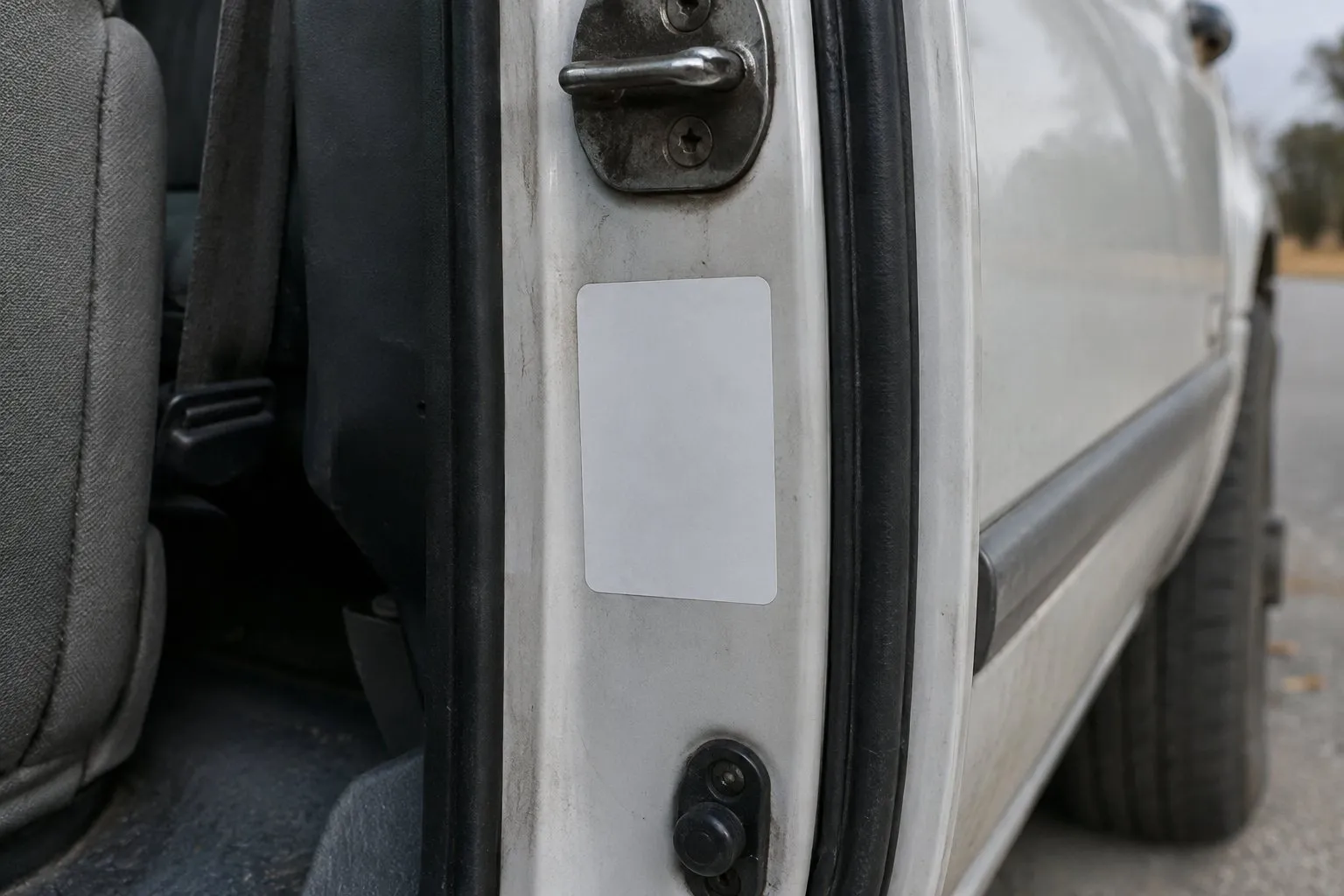
GVWR is the most your loaded truck may weigh, tongue weight included. GCWR is the most truck and loaded trailer may weigh together, and GAWR is the limit for each axle. The truck's GVWR and GAWRs are printed on the certification label in the driver's door opening; GCWR is in the towing guide or owner's manual.
Four ratings, four different limits
Towing guides and spec sheets throw these letters around as if everyone knew them. Each one limits something different, and the lowest one that applies to your rig is the one that counts.
- GVWRLoaded truckTruck, fuel, passengers, cargo and the tongue load, all together.Door label
- GAWREach axleOne value for the front axle, one for the rear. The rear is the one a heavy tongue fills first.Door label
- GCWRTruck plus trailerThe loaded truck and the loaded trailer weighed together.Towing guide or owner's manual
- GTWLoaded trailerThe trailer with water, propane and gear. Hitches are rated by it.Weigh it; trailer GVWR is the ceiling
The "R" makes the difference. GVWR, GAWR and GCWR are ratings: limits the maker sets. GVW, GAW and GCW are weights: what your rig actually puts on a scale. The ratings are printed; the weights you have to measure. How to do that at a truck-stop scale is on how to weigh your truck and trailer.
Where the numbers are printed
Every vehicle sold in the US carries a certification label. For trucks and other passenger vehicles, 49 CFR 567.4 puts it on the hinge pillar, the door-latch post or the door edge next to the driver's seat, and it must list the GVWR and a GAWR for each axle, front to rear, in pounds. Ford calls it the Safety Compliance Certification Label and places it on the left front door lock facing or the door latch post pillar.
GCWR is not on that label. Ford lists it in the Trailer Towing Selector charts for each vehicle and in the owner's manual, and it depends on engine, axle ratio and package. Look up your exact configuration, not the brochure maximum.
Trailers have a label too, on the forward half of the left side, with the trailer's own GVWR and axle ratings. The gap between that GVWR and the "dry weight" in a dealer's brochure is the subject of dry weight vs GVWR.
How tongue weight eats into GVWR and the rear GAWR
Here is the part that catches first-time towers. The trailer's tongue load does not count against the trailer only; it presses down on the truck, so it counts as truck cargo. Ford's guide says it directly: when towing, trailer tongue load is part of the cargo weight, and adding it must not push the truck past its GVWR or rear GAWR. If either limit is exceeded, Ford's advice is a larger vehicle or a smaller trailer.
That is why payload can run out before the tow rating does. The details, with the payload sticker and what counts toward it, are on payload capacity and towing.
The hitch has ratings of its own
Your hitch, ball and receiver each carry a maximum tongue weight and a maximum trailer weight. Equal-i-zer's manual says never to exceed the specified weight ratings for the trailer, tow vehicle, hitch, hitch ball or any other towing equipment, and to use a ball rated at or above the trailer's gross weight. The lowest of all these ratings is your limit. Sizing the hitch to that limit is covered on what size weight distribution hitch you need, and every other term on the ticket is in the glossary.
- Curb weight
- The weight of the vehicle with standard equipment and full fuel, oil and coolant, without passengers or cargo.
- GAWR (gross axle weight rating)
- The load-carrying capacity of a single axle, measured where the tires meet the ground. The label lists one value per axle, front to rear.
- GCW (gross combination weight)
- The measured weight of the loaded truck plus the fully loaded trailer, weighed together. It must never exceed the GCWR.
- GCWR (gross combination weight rating)
- The most the loaded tow vehicle and the loaded trailer may weigh together, including all cargo and passengers. Ford lists it in its Trailer Towing Selector charts and the owner's manual, not on the door label.
- GTW (gross trailer weight)
- The loaded weight of the trailer as it travels, with propane, water and all cargo aboard. Equal-i-zer labels each hitch with a maximum trailer weight and a maximum tongue weight.
- GVW (gross vehicle weight)
- What the loaded vehicle actually weighs on a scale. Ford stresses that GVW is not a limit but a measured weight, and it must never exceed the GVWR.
- GVWR (gross vehicle weight rating)
- The value the manufacturer specifies as the loaded weight of a single vehicle. For a truck it covers the truck itself, passengers, cargo and the trailer's tongue load. A trailer has its own GVWR on its own label.
- Payload
- Ford defines it as the GVWR minus the base curb weight: the combined weight of cargo and passengers the vehicle is designed to carry. When you tow, the tongue load is part of that cargo.
Questions at the scale house
Q01What is the difference between GVWR and GCWR?
GVWR limits one vehicle: the loaded truck on its own, with passengers, cargo and the trailer's tongue load. GCWR limits the whole rig: loaded truck plus loaded trailer, weighed together. You can stay under GCWR and still be over GVWR if the truck is packed full and the tongue is heavy, so check both.
Q02Where do I find the GVWR on a travel trailer?
On the trailer's own certification label. Federal rules (49 CFR 567.4) place the label for trailers on the forward half of the left side, and the label must show the GVWR and the GAWR for each axle. That trailer GVWR is the most the loaded trailer may weigh.
Q03Is GVW the same as GVWR?
No. GVWR is the limit the maker sets; GVW is what the loaded vehicle actually weighs on a scale. Ford's towing guide puts it plainly: GVW is not a limit or specification, it is the actual weight you get when the fully loaded vehicle is driven onto a scale. The GVW must never exceed the GVWR.
Q04Why do separate trailer brakes matter for GCWR?
Because the truck's brakes are rated for the truck alone. Ford's guide notes that the tow vehicle's brake system is rated for operation at the GVWR, not the GCWR, and that separate functional brake systems should be used for trailers weighing more than 1,500 lb when loaded.
Weighed against
Next stop
- Payload and towingHow it worksPayload capacity and towing: tongue weight counts as cargo in your truck, so passengers, gear, hitch and tongue all share one payload figure.
- Dry weight vs GVWRHow it worksDry weight vs GVWR on a travel trailer: what UVW leaves out, how CCC fits in, and which number to use for the truck, the hitch and the tongue.
- Does a weight distribution hitch increase towing capacity?Straight answerDoes a weight distribution hitch increase towing capacity? No. It unlocks the receiver's higher rating, while your truck's tow rating stays the same.
- GlossaryTermsWeight distribution hitch glossary: tongue weight, spring bars, FALR, H1 and H2, GVWR, GCWR, trunnion and surge brakes, in plain English.
- Weigh truck and trailerShop stepsHow to weigh your truck and trailer on a three-platform truck-stop scale: where each axle goes, what the ticket shows, which label to check.
Who weighs it up
weightdistributionhitch.com Editorial Desk
Towing set-up & hitch picks
We are the editorial desk at weightdistributionhitch.com. For every hitch we pull the tongue weight and trailer weight ratings, the shank and ball size, the bracket spacing and the torque values out of the maker's install sheet, then set them against the receiver label and the tow vehicle's own towing guide.
- — Ratings copied from the install sheet or part page, with document name
- — Set-up targets taken from the truck maker's towing guide, not a rule of thumb
- — "Not stated by maker" wherever a rating, surge-brake note or warranty term is missing