Payload capacity and towing: where the tongue weight goes
How it worksReading span: 4 minchecked November 28, 2026by the editorial desk
Payload capacity is the weight of people and cargo your truck may carry: its GVWR minus its base curb weight. When you tow, the trailer's tongue weight is part of that cargo. So the tongue, the passengers, the gear in the bed and the hitch itself all come out of the same payload figure, and none of them may push the truck past its GVWR or its rear axle rating.
On the ticket
Tongue weight counts as payload. Ford's guide lists tongue load as part of the truck's cargo weight and asks you to make sure payload covers the tongue plus passengers and cargo. The total must not exceed the GVWR or the rear GAWR on the door-jamb label. A weight distribution hitch changes how the load splits between axles, not your payload rating.
Payload in one line, and the words around it
Ford's 2026 towing guide spells out the weight terms on its towing basics pages. Five of them decide whether a trailer fits your payload:
| Term | What it means |
|---|---|
| Base curb weight | The truck with a full tank and standard equipment. No passengers, no cargo, no options |
| Cargo weight | Everything added to the base curb weight: cargo, optional equipment and, when towing, the tongue load |
| Payload | The most cargo and passengers the truck is designed to carry: GVWR minus base curb weight |
| GVWR | The most the fully loaded truck may weigh. GVW, the actual weight on a scale, must never exceed it |
| GAWR | The most a single axle, front or rear, may carry. Each axle's load must stay under its own rating |
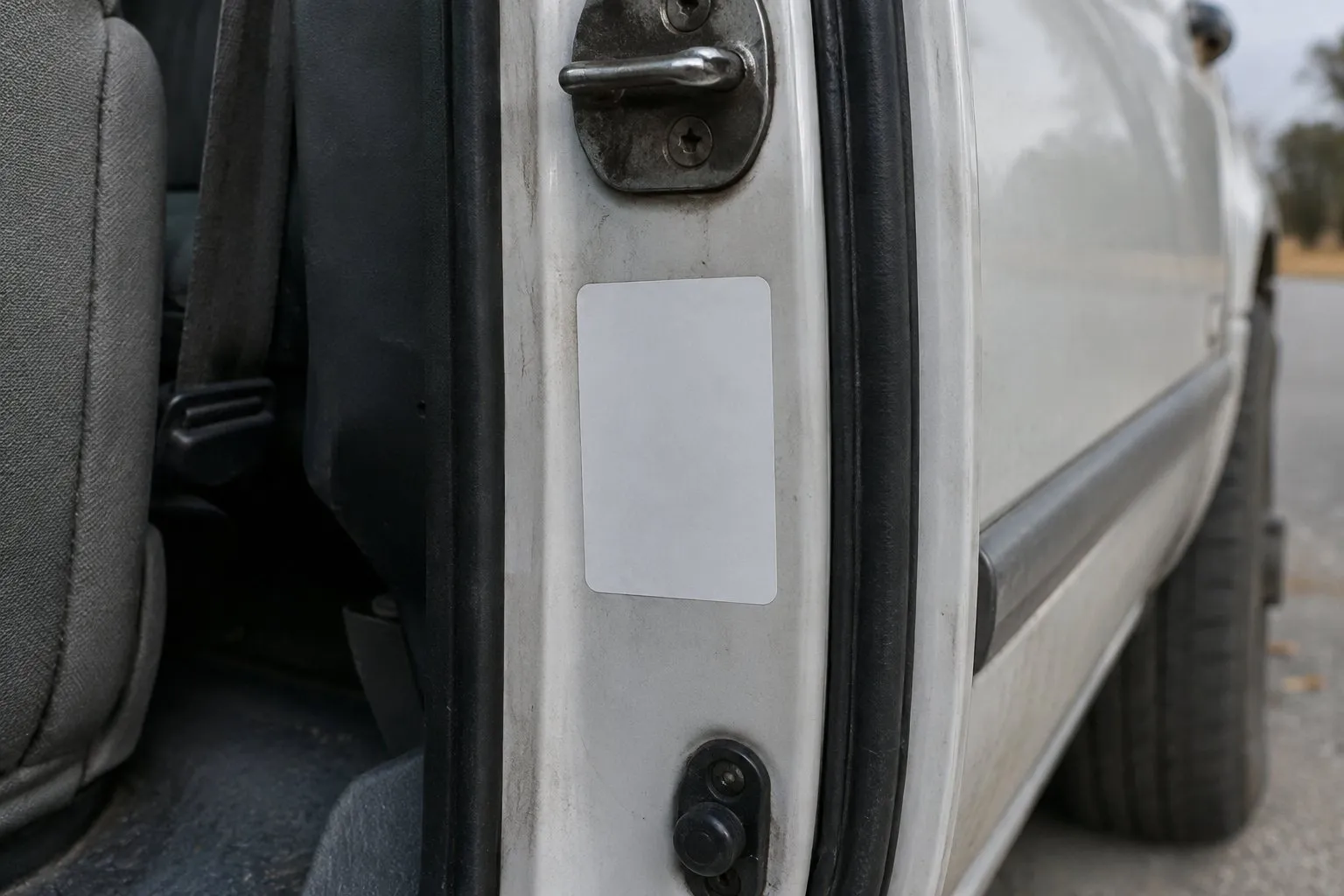
GVWR and both GAWRs are printed on the Safety Compliance Certification Label, on the driver's door edge or the door latch pillar. The towing ratings, GCWR and maximum trailer weight, sit in the towing guide and the owner's manual. All of these terms are explained one by one on GVWR and GCWR.
Where the tongue weight lands
When the coupler drops on the ball, the trailer starts using your payload. Ford counts the tongue load as cargo weight, the same as a cooler in the bed. The notes under every F-150 towing chart spell out the check:
- Make sure the truck's payload, reduced by the weight of its options, covers the tongue load plus passengers plus cargo.
- Adding the tongue load, passengers and cargo must not push the truck past its rear GAWR or its GVWR.
The tongue is a big share of that. Ford plans tongue load at 10 % of the loaded conventional trailer; a 5,000 lb trailer gives 500 lb on the ball in Ford's own example. Heavier trailers bring heavier tongues, and the range is covered on tongue weight percentage.
Four things that eat payload before you leave
The brochure payload is a maximum for the lightest configuration. Ford says maximum payload varies with accessories and configuration, and points you to the label on the door jamb of your own truck. From that figure, take off:
- Passengers. Everyone in the cab, driver included.
- Cargo in the truck. Bed load, toolbox, generator, firewood. Equal-i-zer adds that cargo behind the rear axle presses the back down like tongue weight does.
- The hitch. Ford lists the hitch among the weights to deduct from the trailer rating, so weigh it or take the figure from its maker.
- The tongue load of the trailer as you will tow it, measured, not the brochure's dry figure. How to get the real number: how to measure tongue weight.
If the four together exceed the label payload, the rig is over, whatever the trailer rating says. Ford's advice for that case is short: a larger vehicle or a smaller trailer.
What a weight distribution hitch changes, and what it doesn't
A weight distribution hitch moves part of the tongue load off the truck's rear axle, forward to the front axle and back to the trailer's axles. That helps with the rear GAWR, the per-axle limit, and it brings steering weight back to the front wheels. It does not reduce the tongue weight itself, as explained on does a weight distribution hitch reduce tongue weight.
It also does not raise any rating printed on the door label. Ford's guide states that trailer towing values are the same for weight-carrying and weight-distributing hitches on its Super Duty pickups; what changes is only the receiver's limit. More on that on does a weight distribution hitch increase towing capacity. Plan payload with the full measured tongue weight, as Ford's notes do.
Payload is one of several limits
Payload is not the only number that can stop a trip. The lowest of these wins:
- payload and GVWR from the door label,
- rear GAWR from the same label,
- GCWR and maximum trailer weight from the towing guide,
- the receiver's weight-carrying or weight-distributing rating on its own label, explained on hitch tongue weight rating,
- the hitch's own tongue and trailer ratings.
Ford's guide describes how to check axle loads on a scale: front wheels alone on the deck for the front GAW, all four wheels of the truck for the total, the difference is the rear. The full scale routine is on how to weigh your truck and trailer. Once the numbers fit, size the hitch by the measured tongue on the hitch size guide.
Questions at the scale house
Q01Does tongue weight count as payload?
Yes. Ford's 2026 towing guide defines cargo weight as everything added to the base curb weight, and says that when towing, the trailer's tongue load or king pin weight is also part of the cargo weight. Payload is the most cargo and passengers the truck may carry, so the tongue uses up part of it.
Q02Does tongue weight count towards GVWR?
Yes. GVW is the truck's actual weight with everything aboard, tongue load included, and Ford's guide says the GVW must never exceed the GVWR. Ford also warns that adding tongue weight must not push the truck past its GVWR or its rear GAWR; if either limit is exceeded, go with a larger vehicle or a smaller trailer.
Q03Do air springs raise a truck's payload or GVWR?
No. Air Lift, which makes air springs, calls that a myth: air springs will not change the weight ratings of your vehicle, GVWR, GCWR or GAWR. They help the suspension support a load it already may carry. Air Lift also asks you never to exceed your vehicle's weight ratings.
Weighed against
Next stop
- GVWR and GCWRTermsGVWR, GCWR and GAWR explained: what each towing weight rating limits, where the door label lists them, and how tongue weight counts against them.
- Hitch tongue ratingHow it worksTrailer hitch tongue weight rating explained: the two limits on the receiver label, why the truck and the ball have their own, and which one wins.
- Does a weight distribution hitch reduce tongue weight?Straight answerDoes a weight distribution hitch reduce tongue weight? No. The trailer still puts the same load on the ball; the spring bars move where it ends up.
- Weigh truck and trailerShop stepsHow to weigh your truck and trailer on a three-platform truck-stop scale: where each axle goes, what the ticket shows, which label to check.
- Does a weight distribution hitch increase towing capacity?Straight answerDoes a weight distribution hitch increase towing capacity? No. It unlocks the receiver's higher rating, while your truck's tow rating stays the same.
Who weighs it up
weightdistributionhitch.com Editorial Desk
Towing set-up & hitch picks
We are the editorial desk at weightdistributionhitch.com. For every hitch we pull the tongue weight and trailer weight ratings, the shank and ball size, the bracket spacing and the torque values out of the maker's install sheet, then set them against the receiver label and the tow vehicle's own towing guide.
- — Ratings copied from the install sheet or part page, with document name
- — Set-up targets taken from the truck maker's towing guide, not a rule of thumb
- — "Not stated by maker" wherever a rating, surge-brake note or warranty term is missing