2-5/16 hitch ball for a weight distribution hitch: size, shank and torque
How it worksReading span: 4 minchecked November 28, 2026by the editorial desk
A 2-5/16 hitch ball is the size most weight distribution hitches carry, but the size is set by your trailer's coupler, not by the hitch. The ball also has to be rated at least as high as the loaded trailer, its threaded shank has to fit the hitch head, and the nut needs the torque its maker states.
On the ticket
Match the ball to the size stamped on your coupler; the WD hitches we list ship with 2-5/16 inch. Pick a rating at or above your loaded trailer. On a WD hitch the ball sits in the hitch head, so the shank must fit that head: Equal-i-zer asks for a 1-1/4 inch shank no longer than 2-3/8 inch. Torque the nut to the ball maker's figure.
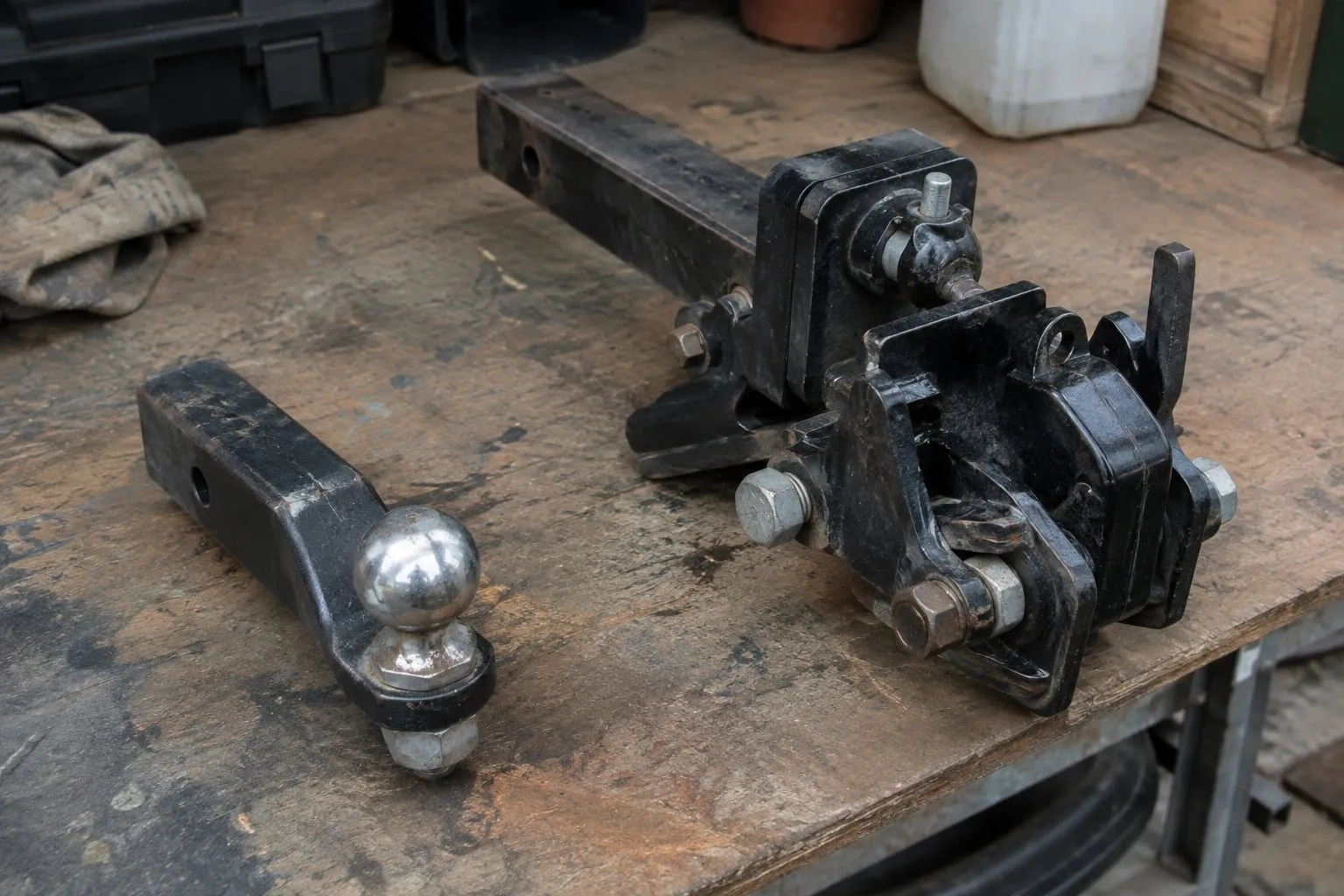
Where the ball sits on a WD hitch
On a plain ball mount the ball bolts to a flat platform. On a weight distribution hitch it bolts through the hitch head, the heavy casting that also holds the spring bars. That changes two things. The ball now carries the coupler while the head carries the bar tension, and the ball's shank has to fit a hole and a depth that the head maker chose. How the head, shank and bars fit together is on parts of a weight distribution hitch.
Your truck does not come with a ball either. Ford's towing guide says its hitch receivers include no hitch ball or ball mount, and that the owner is responsible for the proper ball and mounting equipment.
Four numbers that decide the ball
- DIABall sizeMust match your trailer coupler. Equal-i-zer: always use a ball size that correctly matches the coupler, and check it is coupled securely.Equal-i-zer 4K manual
- GTWWeight ratingEqual to or above the trailer's gross vehicle weight, so the loaded trailer, not the brochure weight.Equal-i-zer 4K manual
- SHKThreaded shankEqual-i-zer heads: 1-1/4 inch diameter, no longer than 2-3/8 inch. A longer shank may damage the head and can void the warranty.Equal-i-zer 4K manual
- TQNut torqueThe ball maker's figure. Equal-i-zer balls 430 ft-lb; CURT 40035 and 40008 list 450 ft-lb.Equal-i-zer manual, CURT part pages
Size: the coupler decides
Equal-i-zer's rule is short: the ball size must correctly match your trailer coupler, and the coupler must be latched securely before you tow. Read the size stamped on the coupler before you buy anything. Every hitch on our best weight distribution hitch list that ships with a ball uses 2-5/16 inch. A 2-5/16 hitch ball on the head does not mean every trailer on your driveway can use the same set-up, though: a trailer with a 2 inch coupler needs a 2 inch ball.
Rating: the loaded trailer, not the sticker
The ball's stamped rating has to cover the trailer as it leaves for the trip, with water, propane and gear on board. CURT's two 2-5/16 inch balls show how wide ratings run inside one size: the 40035 accepts up to 10,000 lb gross trailer weight, the 40008 up to 20,000 lb. CURT's hitch instructions add that if you ever tow without the spring bars, the rating depends on the ball maker's figure, and the ball's maximum must not be exceeded. The lowest rating in the chain wins, and hitch tongue weight rating shows where the others are printed.
Shank: fit the head, not just the coupler
This is the step people skip. Equal-i-zer's manual asks for a ball with a 1-1/4 inch threaded shank no longer than 2-3/8 inch. Compare that with CURT's balls: the 40035 has a 1-1/4 by 2-5/8 inch shank and the 40008 a 1-1/4 by 2-3/4 inch shank. Both are 2-5/16 inch balls, and both are longer than the Equal-i-zer limit. So a ball that fits your coupler can still be wrong for your hitch head. Read the head maker's ball spec first, then shop for a ball.
CURT's ball pages add two mounting rules: the platform must be at least 3/8 inch thick, and the hole must not be more than 1/16 inch wider than the shank.
Torque, grease and the pre-trip check
Torque it once, properly
Use a torque wrench that reaches the figure. Equal-i-zer tightens its balls to 430 ft-lb and lists a 1-7/8 inch thin-walled socket and a 1-3/4 inch box-end wrench for the job. CURT lists 450 ft-lb for its 2-5/16 inch balls. If you lack a wrench that size, Equal-i-zer points you to a dealer for the job.Set the height
Equal-i-zer places the top of the ball 0 to 1 inch above the top of the coupler before hook-up. CURT sets the uncoupled ball higher than the coupler so the truck can squat. How to measure it is on how to measure hitch drop.Grease the ball
CURT's sheet says to clean the ball and the coupler socket at the start of every tow day and coat the ball lightly with grease. Equal-i-zer includes the ball in its grease points before each trip.Check the nut before you roll
CURT's final check list names the trailer ball nut torque, next to the hitch pin, coupler latch and safety chains.
Does the hitch come with a ball?
Some do. CURT's 17062 comes with a pre-torqued 2-5/16 inch ball, and its parts list includes the 1-1/4 inch lock washer and nut. Other kits are sold without one, so read the box contents before you order. If yours came with a ball, it is still worth checking that the coupler on your trailer is 2-5/16 inch before the first hook-up. The full installation order, from shank to spring bars, is on how to install a weight distribution hitch, and CURT's hitches and parts are compared on the CURT brand page.
Questions at the scale house
Q01What size ball does a weight distribution hitch use?
The size your coupler calls for. The head itself takes many ball sizes, so read the size stamped on the trailer coupler and match it. Every hitch on our list that ships with a ball uses 2-5/16 inch. The shank still has to fit the hitch head, and Equal-i-zer limits it to 1-1/4 inch thick and 2-3/8 inch long.
Q02How tight should the hitch ball nut be?
As tight as the ball maker states, checked with a torque wrench. Equal-i-zer tightens its own balls to 430 ft-lb with a 1-7/8 inch thin-walled socket. CURT lists 450 ft-lb for its 2-5/16 inch balls 40035 and 40008. CURT's hitch instructions also put the ball nut on the check list before every trip.
Q03Do I need a hitch ball rated for my trailer's full weight?
Yes. Equal-i-zer's manual says the ball rating must equal or exceed the trailer's gross vehicle weight, so rate it against the loaded trailer, not the dry weight. CURT adds a second rule: never exceed the lowest weight capacity of any towing component. The ball, the hitch, the receiver and the truck all count.
Weighed against
Next stop
- InstallationShop stepsWeight distribution hitch installation in order: coupler height, ball, head on the shank, bars, A-frame brackets, then the torque values.
- Parts explainedHow it worksParts of a weight distribution hitch, from shank and head to spring bars, brackets, pins and sway control: what each one does and where you adjust it.
- CURTMaker fileCURT weight distribution hitch guide: round bar 17062, 15K trunnion 17422 and TruTrack 4P with built-in sway control, and who each one fits.
- Best hitchesBuying sheetBest weight distribution hitch for your trailer: four picks sorted by loaded tongue weight, surge brakes and sway control, with stated limits.
- Hitch dropShop stepsHow to measure hitch drop: level the trailer, measure coupler and receiver height, then set the ball at the height your hitch maker asks for.
Who weighs it up
weightdistributionhitch.com Editorial Desk
Towing set-up & hitch picks
We are the editorial desk at weightdistributionhitch.com. For every hitch we pull the tongue weight and trailer weight ratings, the shank and ball size, the bracket spacing and the torque values out of the maker's install sheet, then set them against the receiver label and the tow vehicle's own towing guide.
- — Ratings copied from the install sheet or part page, with document name
- — Set-up targets taken from the truck maker's towing guide, not a rule of thumb
- — "Not stated by maker" wherever a rating, surge-brake note or warranty term is missing