Weight distribution hitch noise: where squeaks and groans come from
Fault and fixReading span: 4 minchecked November 28, 2026by the editorial desk
Most weight distribution hitch noise comes from metal rubbing where the maker wants grease: the spring bar sockets, the ball, the chain and bracket points. Grease those, keep grease off the parts that work by friction, and check that the chains are not binding. A loud squeal from a cone-friction hitch points to worn friction material.
On the ticket
Find the source first. Spring bar sockets and the hitch head creak when dry: clean and grease them as your manual says. Chains bind or catch when too few links hang free or the chain sits at an angle. Friction sway parts must never be greased. On an Andersen, a loud squeal from the housing means the friction material is worn.
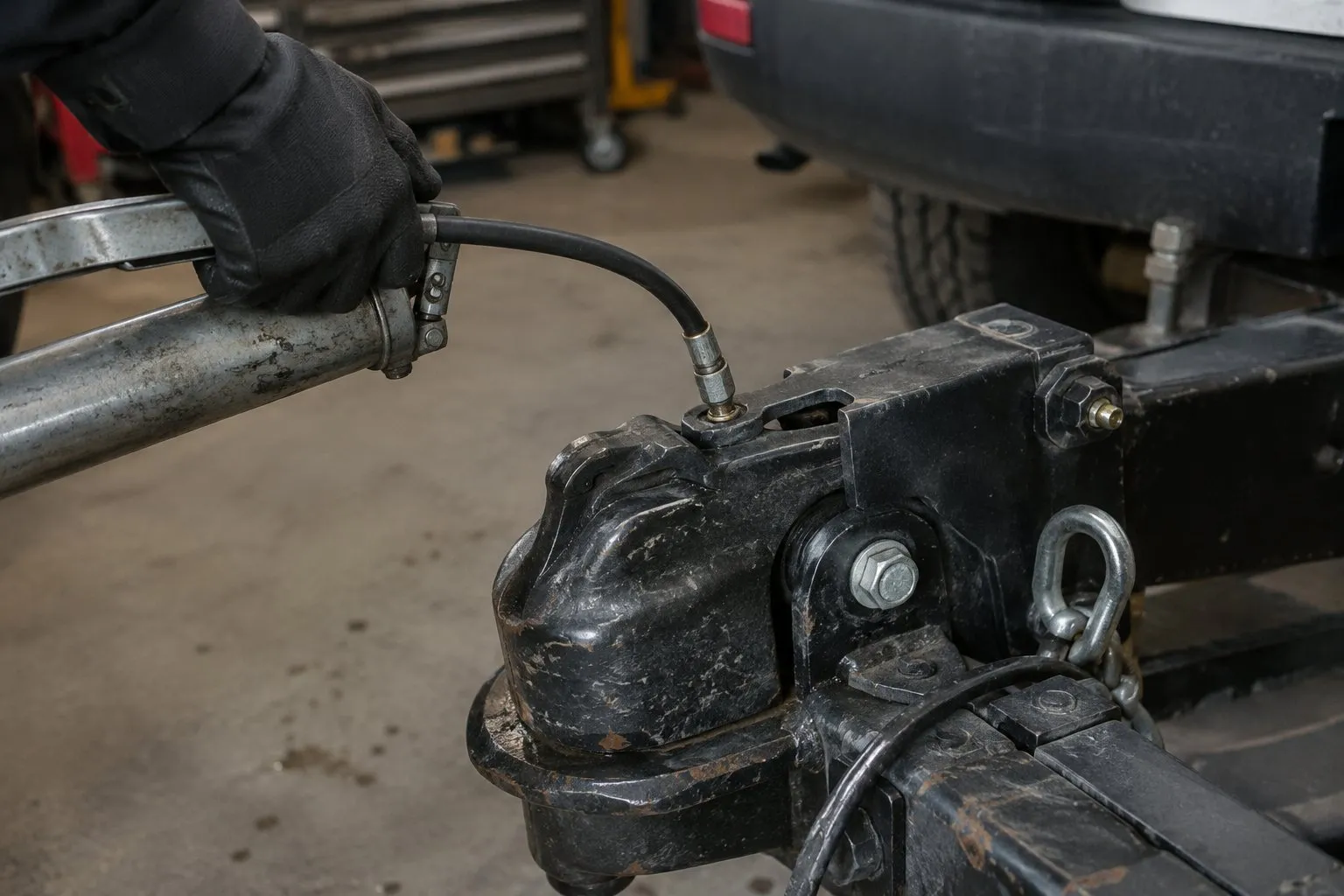
Find the noise before you grab the grease gun
A WD hitch has three kinds of joints, and each one needs different care. Grease the wrong one and you make things worse, because some parts are meant to grip. So listen for where the sound comes from: the head at the truck, the chains and brackets on the A-frame, or the sway control beside them. If you are unsure which part is which, parts of a weight distribution hitch labels them.
| Where it comes from | Likely cause | What the maker says to do |
|---|---|---|
| Hitch head, spring bar sockets | Dry friction surfaces | Equal-i-zer: clean and grease the head and socket surfaces before each trip. CURT: heavy fibrous grease on the round bar ends, more through the grease zerk |
| Ball and coupler | Dry ball | CURT: clean ball and coupler socket every tow day, coat the ball lightly with grease. Equal-i-zer includes the ball in its grease points |
| Chains and lift brackets | Too few free links, chain at an angle, dry rub points | CURT: at least five links between bracket and bar; a chain angled fore or aft can catch on the bracket in turns |
| Friction sway bar or brackets | Wear, dirt on friction faces | Never grease the slide bar (CURT) or L-brackets (Equal-i-zer); clean instead |
| Andersen cone housing | Worn friction material | Andersen: contact them for a replacement; clean the cone first |
Creaks from the head and spring bars
On spring-bar hitches the head is the first place to look, and both manuals we read cover it. Equal-i-zer's maintenance section asks for the friction surfaces of the head and sockets to be cleaned and greased with a good multi-purpose or bearing grease before each trip, at the spots where the arm sockets rub the top and bottom plates of the head. It adds that a properly maintained, clean hitch performs better and reduces wear and towing noise.
CURT's round-bar hitches work the same way with a different tool. The instructions call for a heavy, fibrous grease on the round end of each spring bar before it goes into the head, and the 17062 has a grease zerk in the head so you can add more without pulling the bars. CURT also asks you to coat the clevis pins in the head with fibrous grease at the start of every tow day.
Pops and clunks from the chains
A chain that is too short or sits at an angle can bind or catch. CURT's instructions want at least five links between the lift bracket and the spring bar, the same number on both sides, so the chain can move in turns. With fewer than five, the chain and snap-up bracket bind. CURT also warns that a chain angled fore or aft inside the lift bracket may catch on the bracket when turning, which can damage or pry open the bracket.
Changing the link count changes the weight distribution too, so treat it as an adjustment, not a quick fix. The head tilt and link count are set together on weight distribution hitch adjustment, and CURT notes that you adjust head tilt to get the right chain length.
Squeals from sway control
Friction sway control is supposed to grip, so grease is the wrong answer here. CURT says never to paint or lubricate the slide bar of its friction sway unit; clean it with a wire brush or steel wool after the first 1,000 miles and every 10,000 miles after that. Equal-i-zer says not to lubricate its swing arms or L-brackets, and sells sway bracket jackets to quiet the ride and reduce wear on the L-brackets.
Andersen's chain-and-cone hitch needs no grease, and Andersen says it should not make loud noises, especially loud squeaking. Its FAQ sorts the noise in two:
- Squeal from the ball housing: the friction material is likely worn. Clean the cone and the tapered section of the housing first; if that fails, the cone may need replacing, and Andersen asks you to contact them for the part.
- Noise from the chains: parts rubbing together. Andersen's fix is its trailer and hitch lubricant on the rub points.
More on how that design differs is on the Andersen page.
Keep it quiet between trips
Clean parts stay quieter. Equal-i-zer asks you to clean dirt and debris from all friction surfaces regularly, check for damage or abnormal wear at the start of each trip, and store the hitch out of the weather. CURT asks you not to let dirt or stones lodge between the bars and the head. The full routine, with intervals, is on weight distribution hitch maintenance, and winter care is on weight distribution hitch storage.
Questions at the scale house
Q01Why does my weight distribution hitch squeak?
Usually dry metal on metal. Equal-i-zer says a properly maintained, clean hitch reduces wear and towing noise, and it asks you to grease the friction surfaces of the head and sockets before each trip. On a CURT round-bar hitch the spring bar ends need heavy fibrous grease, topped up through the grease zerk in the head.
Q02Is it normal for a weight distribution hitch to make noise?
Andersen's answer for its own hitch is no: it should not make loud noises, especially loud squeaking. For spring-bar hitches the makers do not give a noise level; they give grease points and wear checks. A new or louder noise is a reason to look, because CURT says excessive wear at the bar sockets can mean overload or too little lubrication.
Q03Should I grease the sway control to stop it squeaking?
No. Friction sway parts work by friction. CURT says never to paint or lubricate the slide bar of its friction sway control, and Equal-i-zer says not to lubricate its swing arms or L-brackets. Equal-i-zer sells sway bracket jackets to quiet the ride and reduce wear on the L-brackets instead.
Weighed against
Next stop
- MaintenanceShop stepsWeight distribution hitch maintenance in ten minutes: where the grease goes and where it never goes, which bolts to check and what wear to look for.
- AdjustmentShop stepsWeight distribution hitch adjustment: which washer, bracket or ball change adds or removes tension, and how to spot over- and under-distribution.
- AndersenMaker fileAndersen weight distribution hitch: how the chain-free cone design works, its 14,000 lb rating, set-up and care, and why surge brakes rule it out.
- Storing the hitchShop stepsWeight distribution hitch storage: take it off the receiver, clean and touch up the steel, unload any sway clamp and keep the bars paired and dry.
- Trailer sway barsBuying sheetTrailer sway bar guide: how a friction sway control bar works, the CURT 17200 we pick, where it mounts, when to take it off, and what it cannot fix.
Who weighs it up
weightdistributionhitch.com Editorial Desk
Towing set-up & hitch picks
We are the editorial desk at weightdistributionhitch.com. For every hitch we pull the tongue weight and trailer weight ratings, the shank and ball size, the bracket spacing and the torque values out of the maker's install sheet, then set them against the receiver label and the tow vehicle's own towing guide.
- — Ratings copied from the install sheet or part page, with document name
- — Set-up targets taken from the truck maker's towing guide, not a rule of thumb
- — "Not stated by maker" wherever a rating, surge-brake note or warranty term is missing